


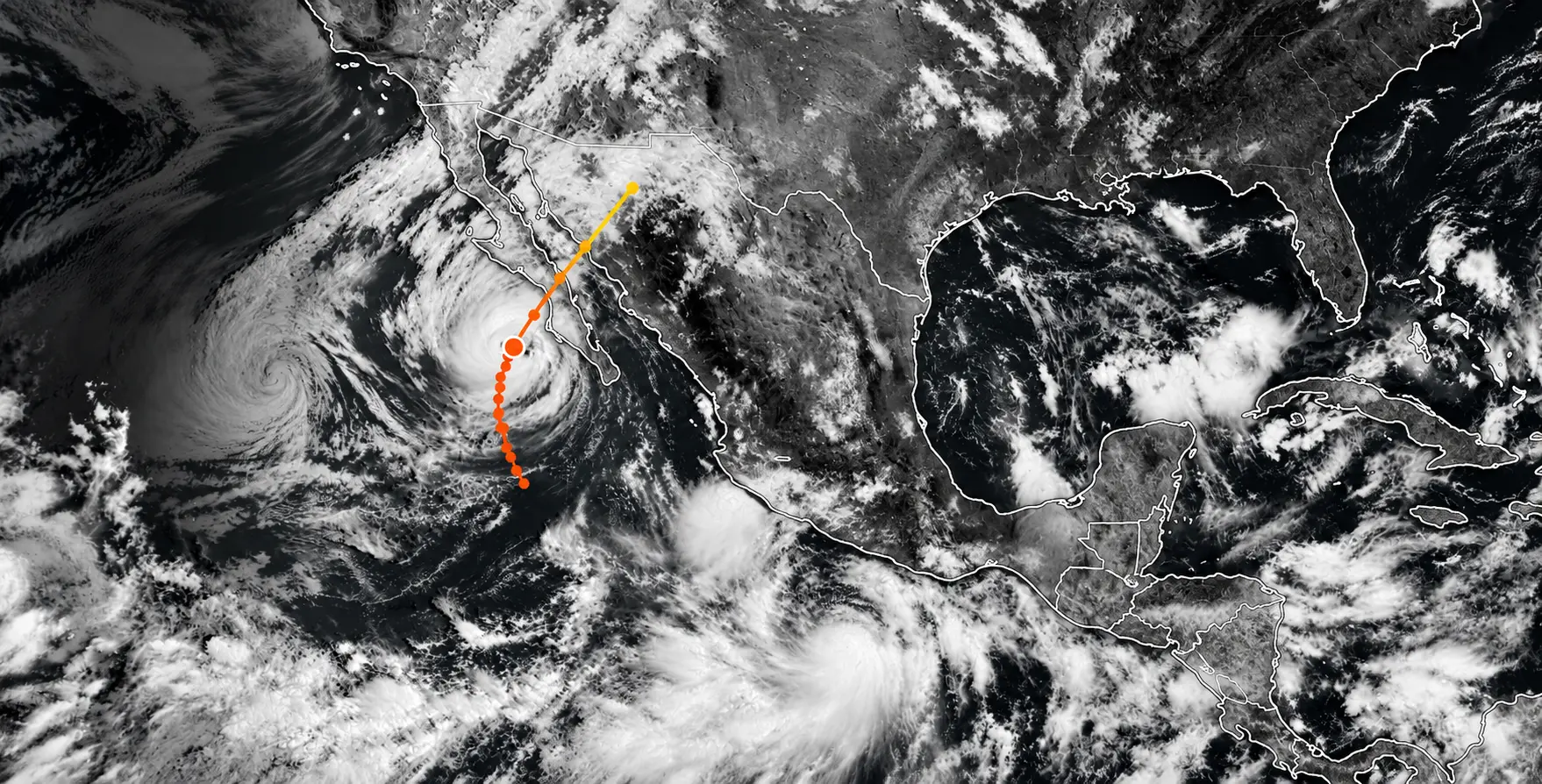
Hurricane Polo in Baja California Sur: How to Prepare Your Property
What homeowners, hotel teams, and property managers can do before the wind arrives
When a hurricane is approaching, its category tends to dominate the conversation. For anyone responsible for a property in Baja California Sur, a more useful question is: What could happen at this particular location, and what can still be done safely?
Hurricane Polo is a reminder that a storm brings more than wind. Loose outdoor items can become airborne. Heavy rain can overwhelm drainage and flood low-lying spaces. Along the coast, dangerous surf and storm surge call for decisions that have little to do with whether the windows are protected.
This guide brings together the forecast available at the time of publication and practical steps for homes, hotels, condominiums, and businesses. The forecast section is time-sensitive. The preparation advice can also help you plan for the next storm.
Hurricane Polo: Latest Situation in Baja California Sur
Forecast snapshot: September 28, 2026, at 8:00 a.m. Mountain Standard Time, based on National Hurricane Center Advisory 32.
At the time of this advisory, Polo was a Category 3 hurricane with maximum sustained winds of 115 mph (185 km/h). Its center was about 85 miles (140 km) west-southwest of Cabo San Lázaro, Baja California Sur, moving northeast at approximately 10 mph (17 km/h).
The National Hurricane Center forecast that Polo’s center would move inland along the Baja California Sur coast on Monday evening, cross the Gulf of California, and move into southern Sonora on Tuesday morning. The exact track, timing, and intensity may change in later advisories.
Polo had reached Category 5 earlier in its life cycle. That describes its past strength; it was Category 3 at the time of this update. Avoid relying on an older headline when making decisions today.
Hurricane warnings were in effect for portions of Baja California Sur’s western and eastern coasts, as well as a section of the mainland coast. Warning boundaries can change. Check the current National Hurricane Center advisory and Mexico’s National Meteorological Service, then follow the instructions issued by Civil Protection for your specific community.
The short answer: If your property is in an area under warning, finish safe preparations before conditions deteriorate. Once strong winds begin, sheltering and following any evacuation order take priority over work on the building.
What Threats Should Property Owners Consider?
Wind and flying debris
Strong gusts can lift patio furniture, planters, signs, tools, and other unsecured objects. Those objects may strike windows, doors, vehicles, or people moving through the property.
While it is still safe, walk through outdoor areas and identify what can be brought inside or secured. Check terraces, balconies, rooftops, service yards, and entrances. Make sure doors and windows close as intended. If the property already has hurricane protection, deploy it according to the system’s instructions before the wind makes that work hazardous.
A hotel or condominium needs a clear assignment of responsibilities. Someone should know which areas are being checked, who operates each protection system, and how completion will be confirmed. An overlooked service entrance or upper-floor terrace can undo an otherwise careful preparation effort.
Heavy rain, flooding, and landslides
The National Hurricane Center forecast rainfall totals of 6 to 12 inches (roughly 150 to 300 mm) in portions of Baja California Sur. It also forecast 4 to 6 inches (roughly 100 to 150 mm) in southern and central Sonora, with isolated totals near 8 inches (200 mm). These are forecast amounts, not rainfall already measured. Flash flooding and landslides are possible, particularly in steep terrain.
Consider how water moves through your property. Are roof drains and ground-level outlets clear? Which storage rooms, electrical areas, or lower-level spaces have flooded before? Is there an access road that crosses a wash or a low point?
Address what you can safely address before the storm. Hurricane screens or shutters protect the openings they were designed for; they do not remove flood risk. Never enter moving water or drive across a flooded road to inspect a building.
Dangerous surf and storm surge
A beachfront property faces a different set of decisions. Polo may produce dangerous surf, rip currents, and coastal flooding. Storm surge can push water inland where winds blow toward the shore, accompanied by large waves.
Keep guests, residents, and staff away from the beach and exposed waterfront areas. Do not go outside to photograph the storm or check the waves. If local authorities order an evacuation, leave as directed even if the building has hurricane protection on every window.
If Your Property Already Has Hurricane Protection
An installed system is most useful when the people on site know how and when to operate it. Before conditions become unsafe:
-
Review the operating instructions. Identify who is responsible for each screen, shutter, or panel and keep access to it clear.
-
Deploy protection early. Do not wait for powerful gusts, and do not use ladders or work at height once weather conditions have deteriorated.
-
Check the rest of the building. Doors, service entrances, and other exposed openings should be part of the property’s preparation plan.
-
Secure outdoor items. Protected windows do not make loose furniture or equipment harmless.
-
Confirm the people plan. Everyone on site should know where to shelter, how they will receive updates, and what to do if Civil Protection orders an evacuation.
For a vacation home, the challenge may be that the owner is away. Confirm who can access the property and operate its protection system before a storm is nearby. For hotels and residential developments, communicate the plan across shifts so that responsibility does not disappear during a handover.
Once conditions are dangerous, stop exterior work. No last-minute adjustment to a shutter is worth exposing a person to high wind or flying debris.
If You Do Not Have a System Installed
With a hurricane approaching, focus on measures that can be completed safely. Do not attempt to improvise a permanent installation during an emergency or send someone outside to work as winds strengthen.
Bring in or secure loose objects. Check that existing doors and windows are closed properly. Clear accessible drains if conditions allow. Protect essential documents and medications, charge communications devices, and identify the shelter or evacuation route designated by local authorities.
If you operate a hotel or business, tell guests and staff where official updates will be shared. Give clear instructions without suggesting that a protected building is automatically a safe place to remain during flooding or an evacuation.
A professional assessment of windows, doors, and other exposed openings belongs in the preparation period before a future storm. That gives you time to select a system suited to the property, arrange installation, and make sure the people who will use it understand how it works.
After Polo: Build a Better Plan for the Next Storm
Wait until authorities say it is safe to travel or return. Then document visible damage and look for signs of water intrusion. Have damaged electrical systems, structural elements, and protection systems assessed by the appropriate professionals before using them again. Stay away from fallen power lines and flooded areas.
The post-storm review should go beyond a list of repairs. Ask what took too long to secure. Were there windows or doors without a clear plan? Did someone have to find instructions at the last minute? Could every guest or resident receive an update? Did water enter through a place no one had considered?
Those answers can guide preparation for the next hurricane season. Start by identifying large openings, exposed windows, main and service doors, and spaces where people spend time. Consider how each protection will be operated, how long deployment takes, and who will do it if the owner is not present.
Storm Catcher manufactures, supplies, and installs hurricane screens, roll-down and folding aluminum systems, and polycarbonate solutions. The appropriate option depends on the building’s layout and requirements. Storm Catcher has a branch serving Los Cabos, where owners and property managers can arrange an assessment once it is safe to do so.
Window and door protection is one part of a broader plan. Drainage, maintenance, loose objects, communication, sheltering, and evacuation procedures all matter.
Frequently Asked Questions
Will Hurricane Polo affect Los Cabos?
Conditions in Los Cabos depend on Polo’s track, the reach of its wind and rain, and the location of the property. A warning for another stretch of Baja California Sur should not be treated as a precise forecast for Los Cabos. Check the latest official advisory and local Civil Protection guidance for the community where you are.
What is the difference between a hurricane watch and a hurricane warning?
A hurricane watch means hurricane conditions are possible somewhere in the designated area. A hurricane warning means they are expected somewhere in that area. The boundaries and timing may change as the forecast is updated.
When should hurricane screens or shutters be deployed?
Follow the instructions for your installed system and deploy it before winds make the task unsafe. If conditions have already deteriorated, prioritize shelter and official directions rather than going outside to finish the job.
Can hurricane protection prevent all storm damage?
No. A properly selected and installed system addresses the openings it was designed to protect. Flooding, storm surge, roof damage, and hazards elsewhere on the property still require their own preparation. An evacuation order always takes precedence.
What should I do if authorities order an evacuation?
Follow the route and shelter instructions from local authorities. Do not remain in a building solely because its windows have hurricane protection. Take essential documents, medications, and supplies if you can do so without delaying your departure.
Protection Starts Before the Forecast Turns Urgent
For now, the priority is to follow current advisories, act on the conditions in your community, and keep people safe. When the storm has passed, there is another useful question to ask: Would every exposed opening in this property be ready for the next hurricane?
If you own or manage a home, hotel, condominium, or business in Los Cabos, contact Storm Catcher to discuss a hurricane protection plan for your property. An assessment completed well ahead of the next storm leaves time to choose, install, and learn to use the right system.
Official updates: National Hurricane Center, Mexico’s National Meteorological Service, and your local Civil Protection office.