


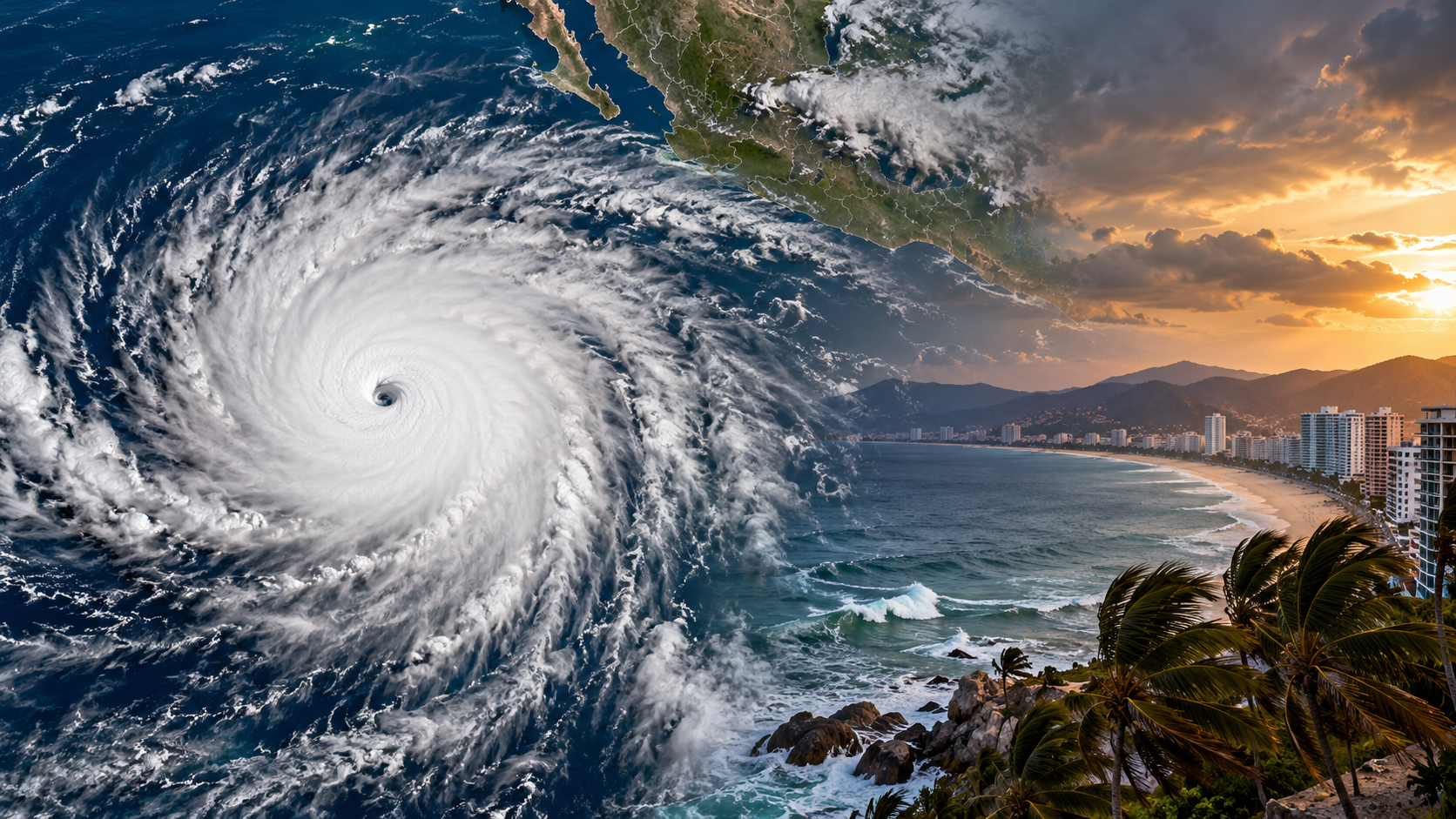
Weather update: October 15, 2026, at 12:00 p.m. Central Mexico Time.
Hurricane Trudy is drawing attention along Mexico's Pacific coast as the storm continues to strengthen and potentially move closer to the country's southwestern and west-central coastline over the coming days.
According to the National Hurricane Center (NHC), Trudy has maximum sustained winds of approximately 95 mph (150 km/h) and is moving north-northwest. Forecasters are watching the storm closely as it could intensify further before approaching the Mexican coast.
For homeowners, hotel operators, business owners, and anyone managing a vacation property in destinations such as Acapulco or Puerto Vallarta, now is a good time to review hurricane preparedness plans and make sure vulnerable areas of their properties are properly secured.
Preparing ahead of a storm can help reduce potential damage, but no protective system can eliminate every risk associated with a hurricane. Always follow official emergency guidance and evacuation orders.
Below, we'll take a closer look at Hurricane Trudy's forecast, the areas that may be affected, the potential hazards, and practical steps you can take to protect your property.
Where Is Hurricane Trudy Right Now?

According to the NHC's Intermediate Advisory Number 9A, issued on Thursday, October 15, 2026, at 12:00 p.m. Central Mexico Time, Hurricane Trudy was located approximately 270 miles (430 kilometers) south-southwest of Acapulco, Guerrero, and 425 miles (685 kilometers) south-southeast of Manzanillo, Colima.
At the time of the advisory, the storm had the following characteristics:
| Storm Information | Reported Conditions |
|---|---|
| Storm name | Hurricane Trudy |
| Advisory date | October 15, 2026 |
| Hurricane category | Category 1 |
| Maximum sustained winds | 95 mph (150 km/h) |
| Movement | North-northwest |
| Forward speed | 6 mph (9 km/h) |
| Minimum central pressure | 979 mb |
| Coordinates | 13.4° N, 101.6° W |
| Location | Eastern Pacific Ocean |
The NHC forecast indicated that Trudy could continue strengthening and potentially become a major hurricane, meaning Category 3 or higher, before approaching portions of Mexico's Pacific coastline over the weekend.
However, a forecast track is not the same as a confirmed landfall. The storm's exact path, intensity, and potential impacts may change as new information becomes available.
Residents and property owners should continue checking updates from the National Hurricane Center, Mexico's National Meteorological Service (SMN), and local Civil Protection authorities.
Which Parts of Mexico Could Be Affected by Hurricane Trudy?
Several states along Mexico's Pacific coast are monitoring Hurricane Trudy, particularly Guerrero, Michoacán, Colima, and Jalisco.
One important thing to remember is that a hurricane doesn't have to make landfall directly in your city to create dangerous conditions.
Heavy rainfall, rough surf, strong winds, and flooding can affect communities well outside the storm's center.
Guerrero: Coastal Monitoring and Hurricane Preparedness in Acapulco
The NHC has issued a tropical storm watch for the coastline from Zihuatanejo, Guerrero, northwestward to Punta San Telmo, Michoacán.
A tropical storm watch means tropical storm conditions are possible within the designated area, generally within 48 hours. It does not mean those conditions are certain to occur.
Although Acapulco is outside that specific watch area, its proximity to the storm makes continued monitoring important.
For homeowners and property managers in Acapulco, this is an opportunity to check windows, sliding glass doors, terraces, balconies, and other exposed areas.
If your property already has hurricane protection systems, make sure they are in good working condition and can be deployed safely when needed.
Michoacán: Heavy Rain, Coastal Surf, and Flooding Concerns
Coastal communities in Michoacán are among the areas being closely monitored.
Potential hazards include heavy rainfall, dangerous surf, and flooding in low-lying locations.
Homes and businesses near the shoreline should make sure drainage systems are clear, secure loose outdoor items, and follow any beach or port restrictions issued by local authorities.
Colima: Preparing for Heavy Rainfall and Changing Storm Conditions
Colima is another state that could experience significant weather associated with Hurricane Trudy.
Forecasters are monitoring the potential for heavy rainfall, which can lead to flooding, especially in areas with poor drainage or steep terrain.
Property owners should inspect roofs, windows, exterior doors, and drainage systems while weather conditions still allow them to do so safely.
Jalisco and Puerto Vallarta: Why Early Preparation Matters
Jalisco is also keeping a close eye on Trudy's development.
For Puerto Vallarta, the key message is preparedness rather than assuming a direct hurricane strike is inevitable.
Oceanfront homes, vacation rentals, resorts, and condominium buildings can face different levels of exposure depending on their location, construction, and surrounding environment.
Large windows, glass doors, balconies, and outdoor common areas deserve particular attention.
Property managers should review their emergency procedures and stay informed as the forecast develops.
What Are the Main Risks Associated With Hurricane Trudy?
A hurricane can create several types of hazards, even in locations that do not experience a direct landfall.
Understanding these risks is an important part of protecting both people and property.
Strong Winds and Flying Debris
High winds can dislodge outdoor furniture, signs, decorative features, and other unsecured objects.
Once airborne, these items can become dangerous projectiles capable of damaging windows, doors, and exterior structures.
Properties with large glass surfaces or exposed terraces may require additional protective measures.
Heavy Rainfall and Flooding
The NHC forecast includes significant rainfall across portions of western Mexico.
Prolonged rainfall can overwhelm drainage systems, flood streets and buildings, and increase the risk of landslides in mountainous areas.
Hurricane shutters and other window protection systems do not prevent flooding or replace proper drainage and flood mitigation measures.
Dangerous Surf and Coastal Conditions
Hurricanes can generate powerful waves and hazardous currents far from their centers.
Coastal residents and visitors should avoid beaches, rocky shorelines, and exposed waterfront areas when dangerous conditions are present.
Always follow restrictions issued by local authorities.
Damage to Windows, Doors, and Building Openings
Windows, glass doors, and other exterior openings may be vulnerable to wind pressure and windborne debris.
The level of risk depends on several factors, including building design, materials, installation quality, maintenance, and the severity of the storm.
This is why hurricane protection should be part of a broader property preparedness plan rather than treated as a last-minute solution.
How to Prepare Your Home or Business Before a Hurricane
Hurricane preparedness is most effective when it begins well before severe weather arrives.
Whether you own a home in Acapulco, manage a resort in Puerto Vallarta, or operate a business elsewhere along Mexico's Pacific coast, these steps can help you get ready.
1. Inspect Windows, Doors, and Exterior Openings
Check for cracked glass, damaged frames, loose fittings, and doors that do not close securely.
If your property has hurricane shutters or other protective systems, inspect them to ensure they are operating correctly.
Avoid attempting repairs or installations once high winds or other dangerous weather conditions begin.
2. Secure Balconies, Patios, and Outdoor Furniture
Bring lightweight furniture, planters, umbrellas, and decorative objects indoors whenever possible.
In hotels and condominium buildings, outdoor preparations should be coordinated by the appropriate maintenance and property management teams.
3. Check Gutters and Drainage Systems
Clear accessible gutters, drains, and other areas where debris could block the flow of rainwater.
Pay particular attention to locations that have experienced flooding or standing water during previous storms.
Only perform this work when conditions are safe.
4. Review Your Emergency Plan
Know your evacuation routes, identify official shelters, and keep essential supplies readily available.
These may include drinking water, medications, important documents, flashlights, batteries, and emergency communication devices.
Hotels and businesses should also establish clear responsibilities for communicating with employees, guests, residents, and service providers.
5. Follow Official Emergency Instructions
Evacuation orders, business closures, and other emergency measures should always be based on guidance from local authorities.
Never remain in an unsafe building simply because it has hurricane protection systems installed.
How Can Hurricane Protection Systems Help Protect Your Property?
Hurricane protection systems are designed to help protect certain building openings against severe wind conditions and, depending on the product's tested performance, impacts from windborne debris.
Their effectiveness depends on the specific system, applicable testing and certifications, opening dimensions, anchoring requirements, and proper installation.
Not every product offers the same level of protection, and not every system is suitable for every property.
At Storm Catcher, we specialize in hurricane protection solutions for residential, hospitality, and commercial properties throughout Mexico.
Our product options include hurricane screens, roll-down aluminum shutters, and folding aluminum shutter systems.
Hurricane Screens
Hurricane screens provide a flexible protective barrier for certain windows, glass doors, terraces, and other exposed openings.
Depending on the system configuration, they can be adapted to a range of architectural applications.
Product selection should take into account the dimensions of the opening, installation requirements, and the system's technical specifications.
Roll-Down Aluminum Hurricane Shutters
Roll-down aluminum shutters are designed to cover windows and exterior openings when protection is needed.
They can be a practical option for homeowners and commercial property managers looking for an integrated protective system.
Depending on the project, manual and motorized configurations may be available.
Folding Aluminum Hurricane Shutters
Folding aluminum shutters offer another option for protecting certain windows, doors, and exterior access points.
The right configuration depends on the building's architecture, structural conditions, and day-to-day operational needs.
Explore our hurricane protection solutions: https://stormcatcher.com.mx/productos/
Hurricane Protection for Hotels, Condominiums, and Commercial Properties
Preparing a commercial property for hurricane season involves more than securing a few windows.
Hotels, resorts, and condominium buildings must consider guest and resident safety, employee responsibilities, common areas, access points, building systems, and emergency operations.
For hotels, this may involve coordinating with maintenance teams, reviewing emergency communication procedures, and ensuring outdoor areas can be secured efficiently.
Condominium associations and residential developments should establish clear responsibilities among property managers, residents, and maintenance personnel.
A useful preparedness plan includes an inventory of vulnerable openings, inspection schedules, equipment maintenance, and established procedures for deploying protective systems.
Ideally, hurricane protection should be evaluated and installed well before a storm approaches.
When a hurricane is already threatening the area, the priority must shift to following emergency procedures and keeping people out of harm's way.
Storm Catcher in Acapulco and Puerto Vallarta: Hurricane Protection for Coastal Properties
Owning or managing property along Mexico's Pacific coast comes with unique considerations.
In addition to tropical storms and hurricanes, coastal buildings are regularly exposed to salt air, humidity, and seasonal weather conditions.
Storm Catcher serves property owners in Acapulco and Puerto Vallarta, with additional locations in Cancún and Los Cabos.
Storm Catcher Acapulco
For homeowners, hotel operators, and commercial property managers in Acapulco, hurricane preparedness is an essential part of protecting their investment.
Storm Catcher provides guidance on hurricane protection systems for residential and commercial applications, helping property owners explore solutions suited to their buildings.
Storm Catcher Puerto Vallarta
Puerto Vallarta is home to beachfront resorts, vacation properties, condominium developments, and private residences with a wide variety of architectural features.
Selecting the right hurricane protection system requires an understanding of the property's layout, exposed openings, and technical requirements.
Our team can help property owners evaluate the available options and plan appropriate installations.
Find a Storm Catcher location: https://stormcatcher.com.mx/sucursales/
Request a quote: https://stormcatcher.com.mx/cotizador/
Please note that site visits, product availability, and installations depend on local operating and weather conditions. When severe weather is approaching, official safety instructions always take priority.
Frequently Asked Questions About Hurricane Trudy 2026
Where is Hurricane Trudy located?
According to the NHC advisory issued at 12:00 p.m. Central Mexico Time on October 15, 2026, Hurricane Trudy was approximately 270 miles (430 kilometers) south-southwest of Acapulco, Guerrero, with maximum sustained winds of 95 mph (150 km/h).
Its position may have changed since that advisory.
Is Hurricane Trudy going to hit Acapulco?
As of the advisory referenced in this article, a direct landfall in Acapulco had not been confirmed.
Residents and property owners should continue monitoring official forecasts and local Civil Protection announcements.
Will Hurricane Trudy affect Puerto Vallarta?
Jalisco is among the states monitoring the storm's development.
However, there is still uncertainty about the exact track and potential effects in Puerto Vallarta. A direct impact should not be considered confirmed.
What category is Hurricane Trudy?
As of the October 15, 2026, midday advisory, Hurricane Trudy was a Category 1 hurricane with maximum sustained winds of approximately 95 mph (150 km/h).
Forecasters indicated that further strengthening was possible.
What does a tropical storm watch mean?
A tropical storm watch means tropical storm conditions are possible within the designated area, generally within 48 hours.
It is a signal to review preparations and closely follow official updates, not a confirmation that the storm will strike.
How can I protect my home's windows during a hurricane?
Start by evaluating the condition of your windows, doors, and frames.
Depending on the building, professionally selected and properly installed hurricane protection systems may help reduce exposure to wind and windborne debris.
Applying tape to glass is not an effective way to protect windows from hurricane impacts.
What type of hurricane protection is best for an oceanfront property?
The right system depends on the building's construction, window sizes, wind exposure, environmental conditions, and applicable technical requirements.
Hurricane screens and aluminum shutter systems are among the options worth evaluating with a qualified provider.
Where can I find official Hurricane Trudy updates?
Reliable sources include the National Hurricane Center, Mexico's National Meteorological Service, and local Civil Protection authorities.
Because forecasts can change quickly, always consult the latest official advisory.
Hurricane Preparedness Starts Long Before a Storm Arrives
Hurricane Trudy is another reminder of why preparation matters for property owners throughout Mexico's Pacific coast.
Tracking a storm is important, but it is only one part of being ready.
Understanding your property's vulnerabilities, maintaining exterior openings, reviewing emergency plans, and considering appropriate hurricane protection systems can all contribute to a more comprehensive preparedness strategy.
At Storm Catcher, we believe hurricane protection should be part of long-term property planning, whether you own a private residence, manage a hotel, or oversee a commercial development.
If you're exploring ways to protect your property's windows, doors, and other exposed openings, our team can help you understand the available systems and installation options.
Explore our products: https://stormcatcher.com.mx/productos/
Find your nearest location: https://stormcatcher.com.mx/sucursales/
Request a quote: https://stormcatcher.com.mx/cotizador/
Official Weather Sources
-
National Hurricane Center: https://www.nhc.noaa.gov/
-
Hurricane Trudy advisory archive: https://www.nhc.noaa.gov/archive/2026/TRUDY.shtml
-
Mexico's National Meteorological Service: https://smn.conagua.gob.mx/
Important notice: This article is provided for informational and preparedness purposes only. Weather information reflects the advisory date and time indicated above and should not replace current official forecasts, emergency alerts, evacuation orders, or instructions from Civil Protection authorities.