


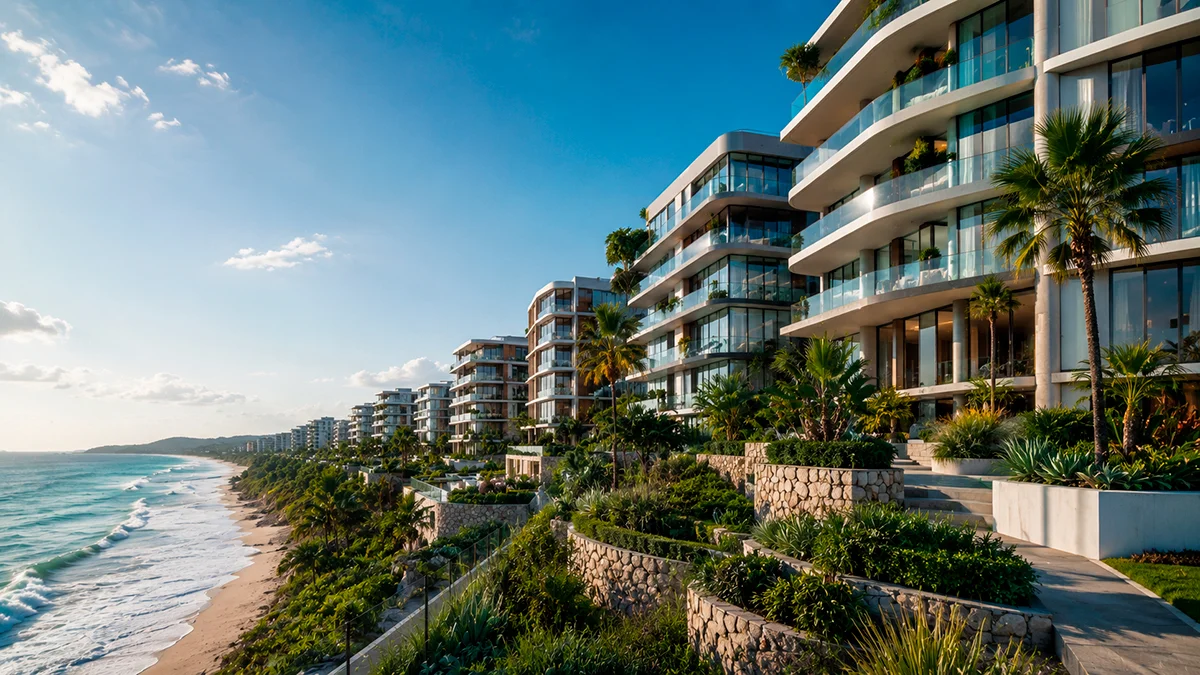
Coastal architecture is changing
For many years, hurricane protection was considered a decision made after a property had already been built. First, the project was designed, then it was constructed, and only afterward were possible protection measures evaluated.
Today, that logic is changing.
Modern real estate developments located in Mexico’s coastal areas are incorporating resilience criteria from the earliest stages of architectural design. The reason is simple: building in destinations such as Cancun, Riviera Maya, Los Cabos, Puerto Vallarta, or Acapulco means considering, from the beginning, the weather conditions that will affect the property throughout its entire useful life.
Protection is no longer seen only as a response to a storm. More and more developers now view it as part of a strategy to preserve value, improve the user experience, and increase a property’s ability to recover from severe weather events.
What it means to design a property with resilience in mind
Resilience in architecture means creating spaces that can better adapt to adverse conditions and recover more quickly after a weather event.
It does not mean designing buildings that look like fortresses.
It means integrating smart solutions that help:
- Reduce vulnerabilities.
- Protect critical areas.
- Facilitate recovery.
- Lower future costs.
- Preserve the experience of residents and visitors.
In coastal areas, this vision is especially important due to constant exposure to:
- Strong winds.
- Humidity.
- Salt exposure.
- Tropical storms.
- Hurricanes.
Why developers are incorporating protection from the planning stage
Today’s buyers are more informed than they were a few years ago.
In addition to location and amenities, many investors now consider factors related to:
- Safety.
- Maintenance.
- Durability.
- Climate risks.
For this reason, integrating protection solutions from the design stage can become a competitive advantage for any real estate project.
Higher perceived value
Developments prepared to face complex weather conditions often convey a greater sense of safety and planning.
This can positively influence the perception of buyers and residents.
Lower future adaptation costs
Incorporating certain elements during construction is usually more efficient than making modifications later.
Early planning allows protection solutions to be integrated more harmoniously into the architectural design.
Better experience for property owners
A property designed to withstand coastal conditions can offer greater peace of mind and require fewer corrective interventions over time.
Elements usually considered from the design stage
Every project has different needs, but there are several aspects commonly evaluated from the early planning phases.
Glass surfaces
Current architectural trends favor open spaces and large windows to take advantage of ocean views and natural light.
However, these features also increase exposure to severe weather events.
Access points and open areas
Terraces, balconies, and common areas require a specific evaluation to identify potential vulnerabilities.
Common areas
Modern vertical developments and condominiums increasingly consider the protection of shared spaces to support operational continuity and resident well-being.
Critical infrastructure
Some projects integrate strategies designed to protect essential areas for the property’s daily operation.
Benefits of a preventive vision for developers and investors
Prevention does not only protect structures.
It can also generate benefits related to operations and the commercial value of the project.
| Benefit | Impact |
|---|---|
| Lower vulnerability | Greater response capacity |
| Property asset protection | Value preservation |
| Long-term planning | Fewer future adjustments |
| Buyer confidence | Better perception of the development |
| Operational continuity | Lower impact after weather events |
Resilient architecture is already part of global trends
Coastal cities around the world are evolving to adapt to increasingly complex climate scenarios.
Today, concepts such as:
- Urban resilience.
- Sustainable construction.
- Climate adaptation.
- Resilient infrastructure.
are part of the conversation among architects, developers, and real estate specialists.
Mexico is no exception.
Coastal destinations continue to grow, and more projects are now considering climate preparedness as a strategic component of their value proposition.
Frequently asked questions about resilient architecture and hurricane protection
What is resilient architecture?
Resilient architecture is a design approach that seeks to improve a property’s ability to adapt and recover from adverse conditions.
Do only large developments need this type of planning?
No. Both residential and commercial projects can benefit from a preventive vision from the early stages.
Should hurricane protection be considered during the design stage?
More and more developers are integrating these criteria from the planning stage to optimize resources and reduce future modifications.
Does resilience increase the value of a property?
It can contribute to a better perception of safety, preparedness, and asset preservation.
Do coastal properties face greater risks?
Yes. The combination of humidity, salt exposure, strong winds, and weather events requires more specialized planning.
Can prevention reduce future costs?
In many cases, a preventive strategy helps reduce expenses related to repairs and later adaptations.
Designing for the future also means preparing for it
Modern real estate developments are no longer limited to offering location, design, and amenities. More and more projects are incorporating resilience criteria that allow them to respond more effectively to the challenges of coastal areas.
Thinking about protection from the design stage does more than help reduce risk. It also contributes to building properties that are better prepared, more competitive, and better positioned to preserve their value over the long term.
Want to know which aspects can strengthen the resilience of a coastal property?
Every project has unique conditions. Understanding them from the earliest stages makes it possible to make more informed decisions and develop strategies aligned with the real needs of each property.